
INFINISTERRA

Ellora Kailashanatha, physical Model 1:100 scale, mixed media, 150 x 180 x 140 cm, 2014

Ellora Kailashanatha, digital models, 2014

Infinisterra Exhibition, digital model, Museu do Oriente, Galeria Nascente, 2014

Pantone, 840 photographs 10 x 7.5 cm format, 314.5 x 223.5 cm, 2014

Infinisterra, exhibition view, Museu do Oriente, Lisbon, 2014

Memories, film projection, 123 min. colour, 2014

Black Box, construction process
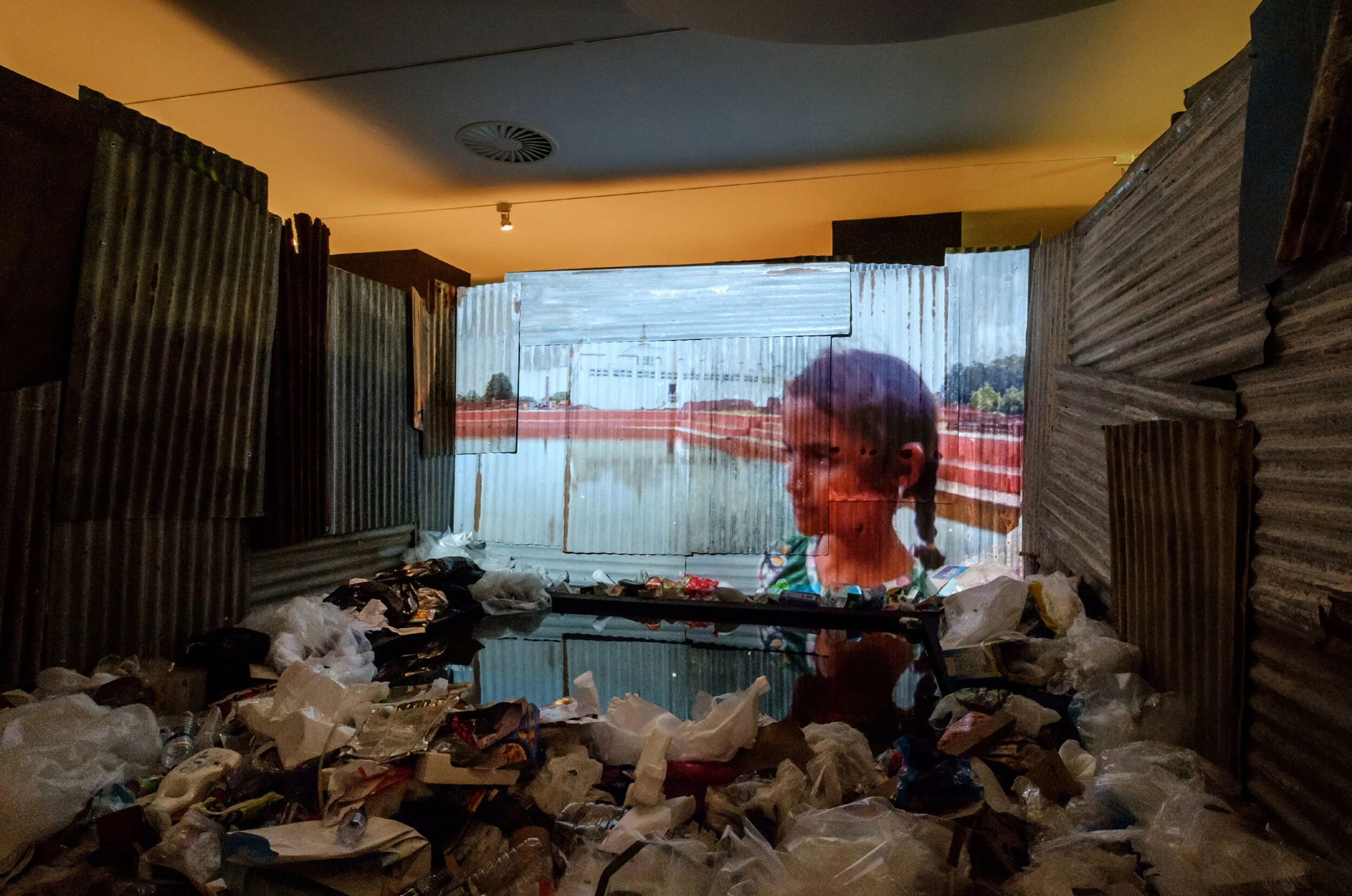
Black Box, film 25 min. color, mixed media, 650 x 400 x 250 cm, Museu do Oriente, Lisbon, 2014

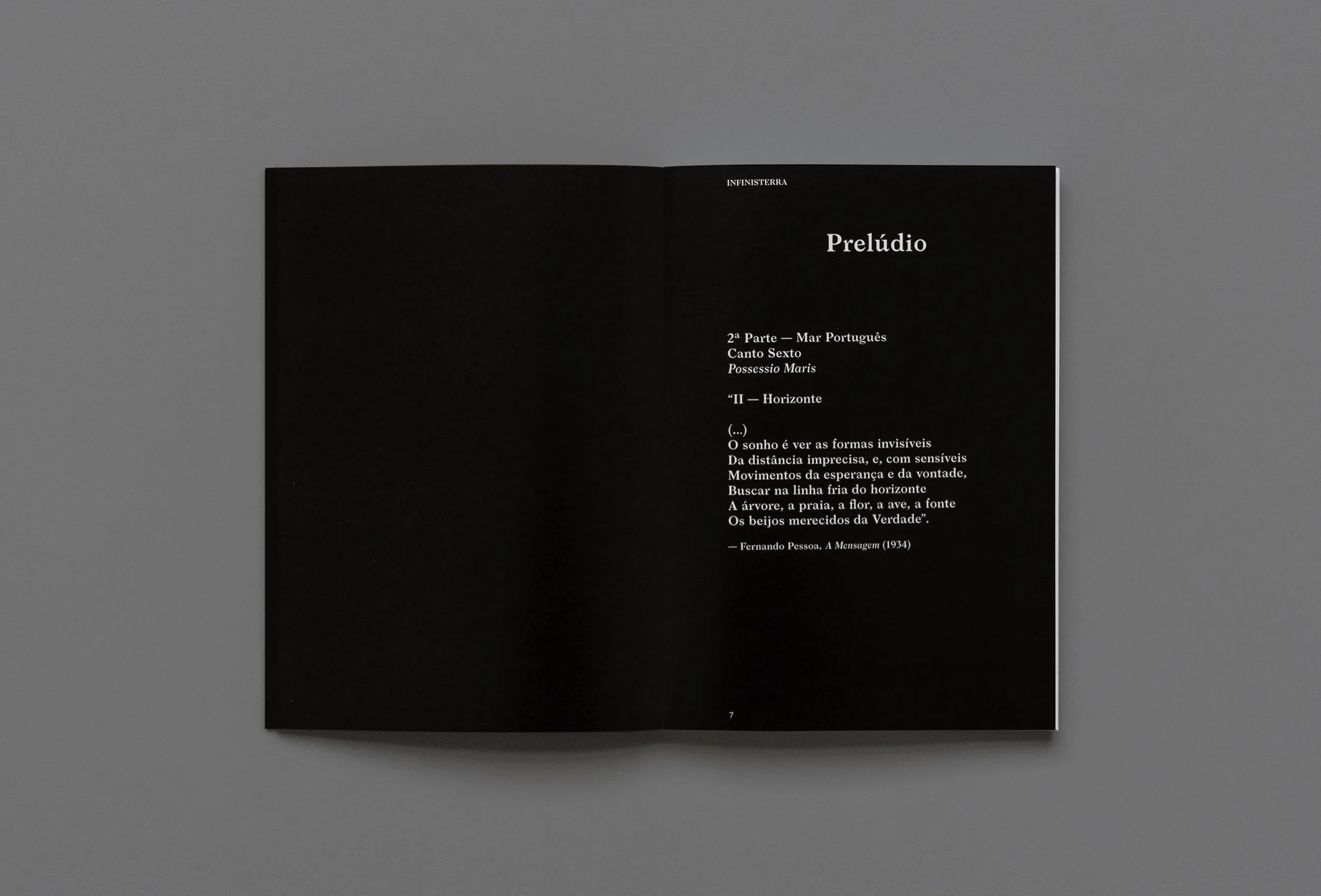
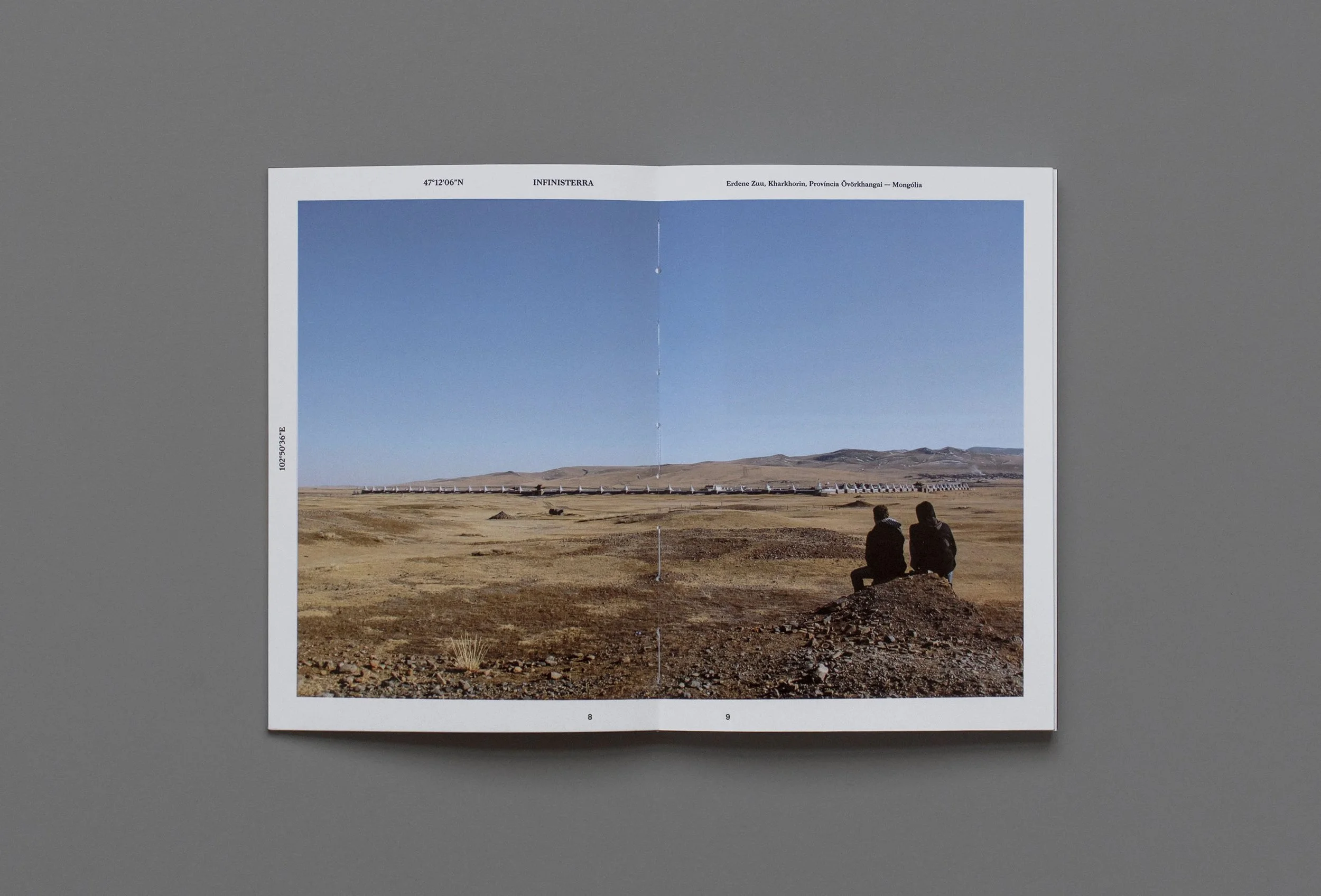
Infinisterra - Architecture and Culture in Contemporary Asia, 118 pages, colour, author's edition, 50 numbered copies, 2017 / editorial design by Tomás Gouveia
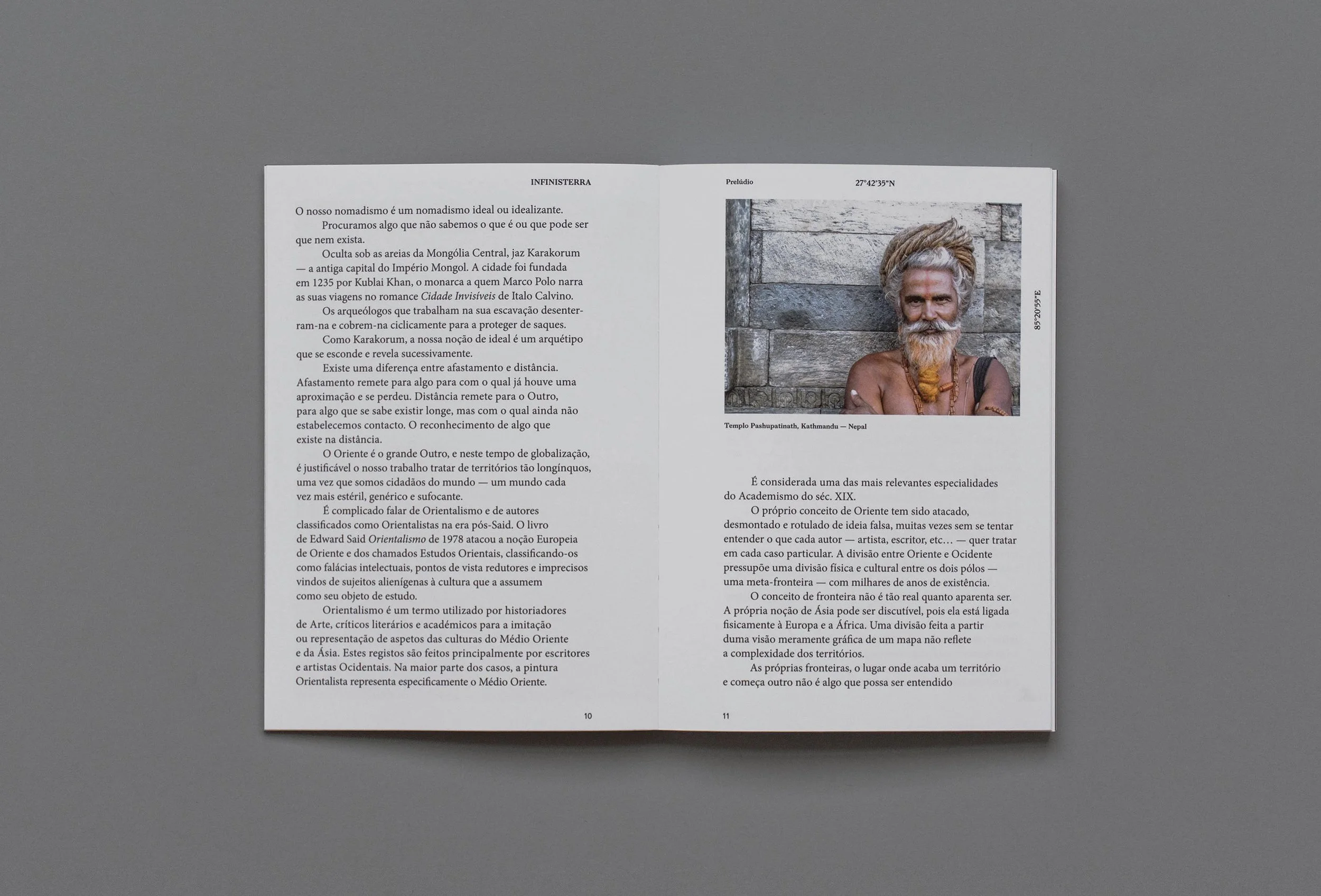
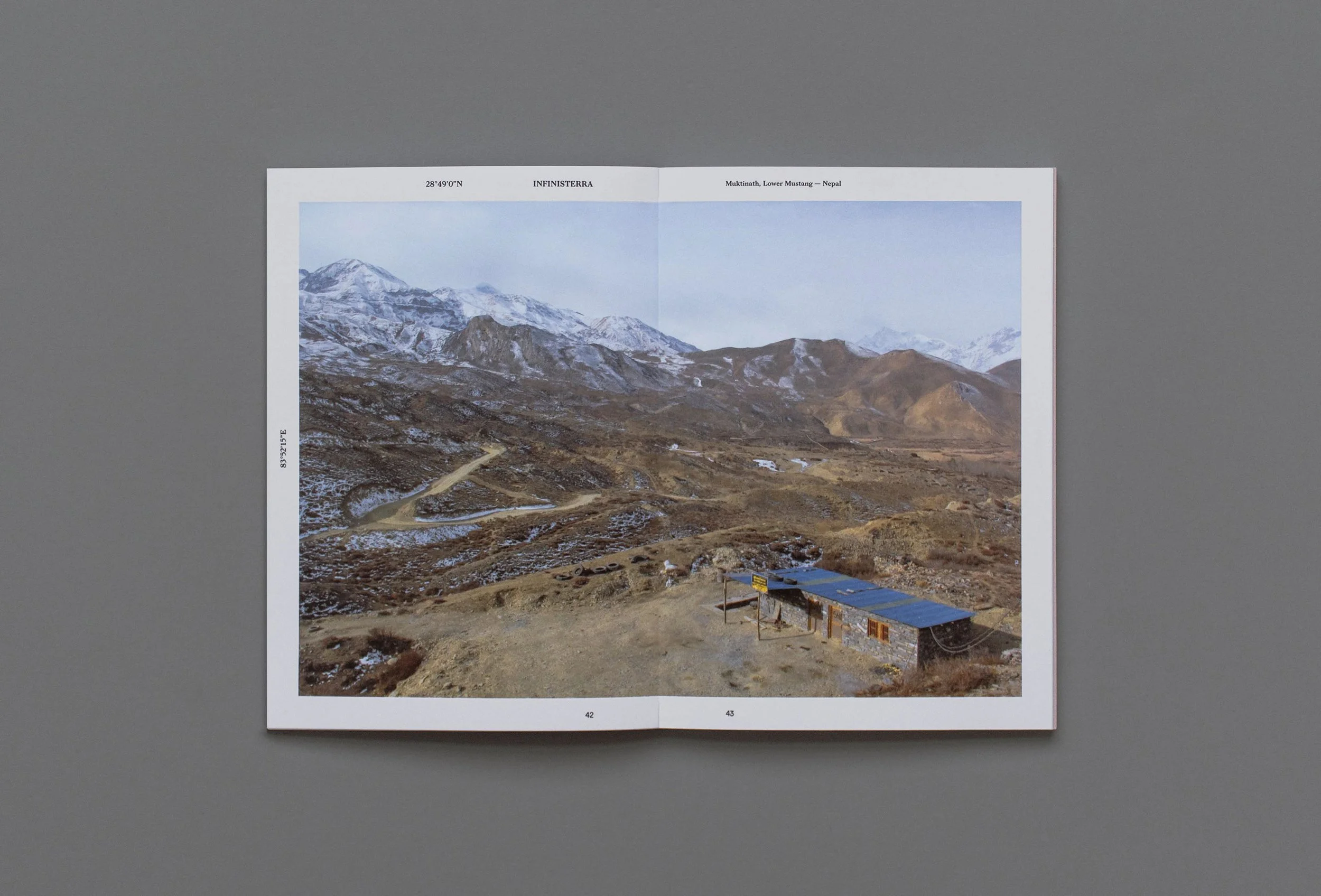
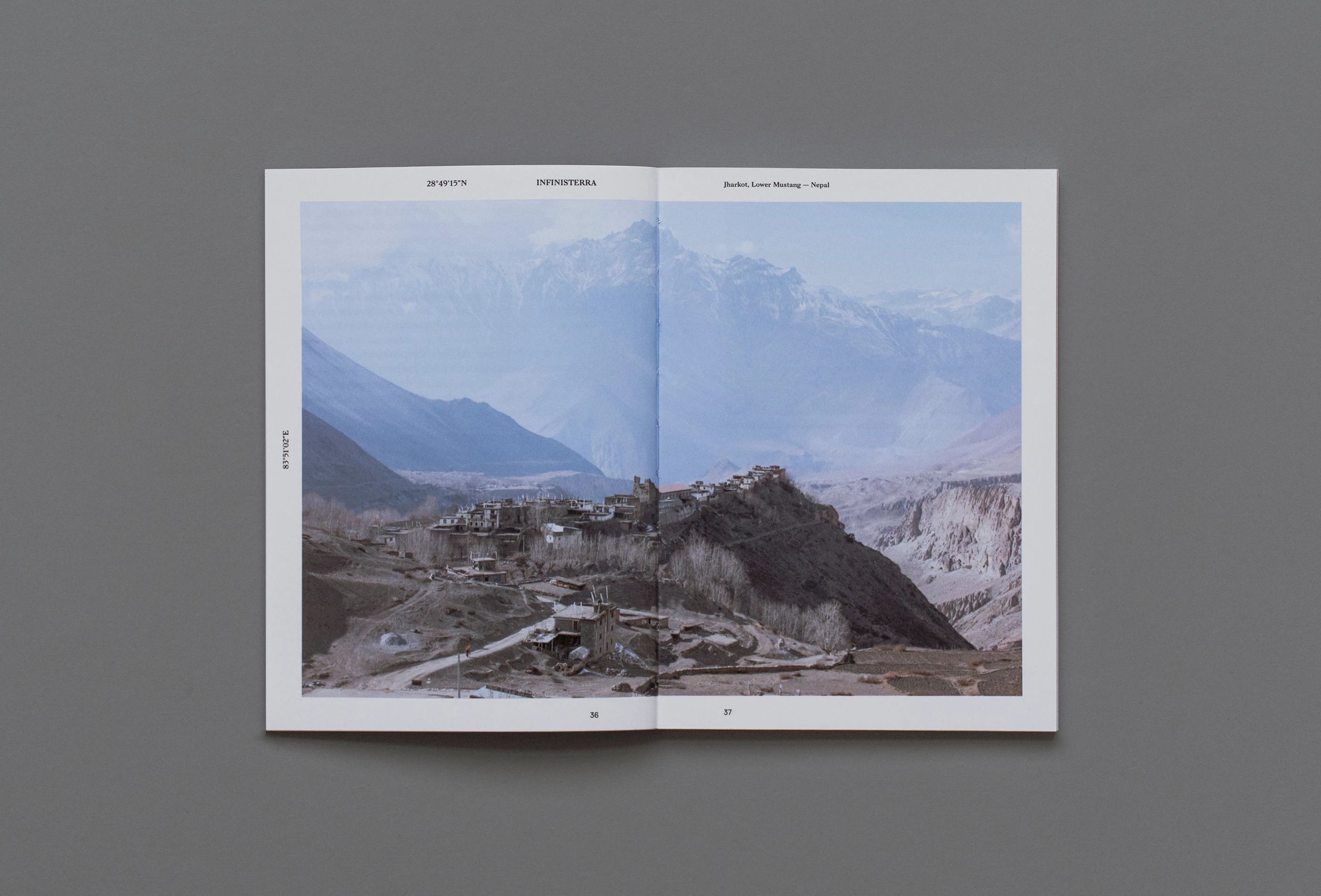
Infinisterra is a Lisbon-based arts and architecture studio, active between 2013-2018.
The foundational events for its activity were two long research travels through Asia, undertaken with the objective of collecting data on contemporary Asian culture and architecture. The first journey was self-funded and resulted in a series of exhibitions and conferences. The second travel was funded by Fundação Oriente’s research scholarship, attributed in 2015 and resulted in an independently published book entitled Infinisterra - Architecture and Culture in Contemporary Asia.
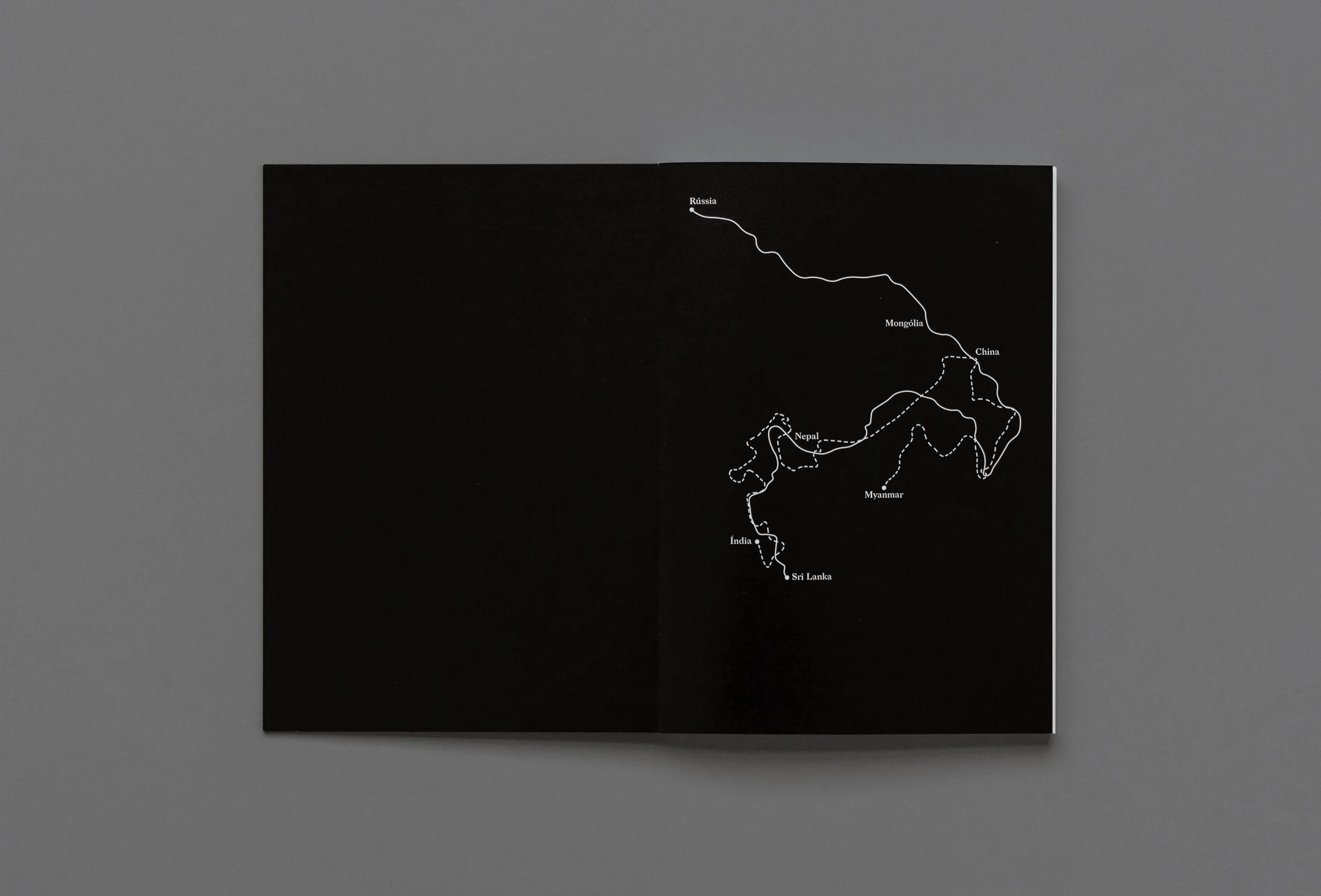
The project unfolded through two distinct fieldwork journeys. The first followed a route from Russia through Mongolia, China, Nepal, and India, concluding in Sri Lanka. The second traced a trajectory from India to Nepal, China, and Myanmar. The territories crossed were extensively registered within a transdisciplinary approach, resorting to photography, film, sound capture, drawing and writing.
The results are dozens of thousands of pictures, hundreds of hours of film, many hours of audio and dozens of interviews with people of relevant interest in all countries. The ambition of the initiative was the creation of a global database, a reflection that integrated architecture, art, sociology and cultural anthropology.
Infinisterra’s extension has to be understood in its totality: the investigation, resulting exhibitions and its online presence. On the internet, an archive of more than 200 publications of totally original material can be found. Photographs and videos are presented with research articles on findings and thoughts of the traversed territories.
The data capture was done in situ, aiming at its creative transformation. By establishing a dialogue between ancient and modern, new knowledge and relations anchored in the complex contemporary reality were created.
Engagement with Portuguese colonial heritage and the concept of Orientalism was inescapable. Stepping into these journeys, Infinisterra became an embodied inquiry into the systems of power that persist to this day, and how their influence shapes worldviews and sustains dominant narratives.
“A portrait, a photograph, is a mechanism that allows us to travel through space and time, a sort of return to the places where we were happy.
The Infinisterra project is of another order (…)
The anthropological and photographic pilgrimage translates into three large format models, plans and photo panels, a composition of more than 800 pictures and an audio-visual installation, resulting from the recollection of thousands of pictures, hours of film and audio recordings and dozens of interviews.They used several technologies, such as video, audio and photographic manipulation, digital 3d modeling paired with artisanal sculpture and model building techniques.
A device that works on several senses and scales, and provides the particular epiphany as well as the universalist sense of the collective look – and still allows a margin to dream with places made of stone which promised a future of giants”.
- in VISÃO magazine, April 2015